

- How much you need to retire in Washington State depends on the life you plan to live. Your retirement budget should reflect your expected housing costs, healthcare, everyday expenses, travel, hobbies, and other priorities rather than a generic savings target.
- Compare your expected retirement income with what you plan to spend. Social Security, pensions, annuities, and other income sources may pay for some of your expenses. Your retirement savings and investments will need to fill any gaps.
- Healthcare and long-term care deserve a place in your retirement plan. In addition to routine healthcare expenses, consider how you’ll pay for health insurance if you retire before Medicare kicks in and how you would cover the cost of long-term care if you need it later in life.
- Taxes affect how much of your retirement income you actually have available to spend. In Washington State, federal income taxes may apply to Social Security benefits, pensions, retirement account withdrawals, and investment income. Washington retirees also need to budget for property and sales taxes, while capital gains and estate taxes may factor into planning for some households.
- Your retirement number needs to hold up when circumstances change. Inflation, market downturns, rising expenses, and a longer-than-expected retirement all affect how long your savings last. Having a flexible withdrawal strategy and spending plan can give you more options to adjust along the way.
You’ve probably seen articles claiming you need $1 million, $2 million, or even more to retire comfortably.
While those estimates certainly get your attention, they don’t tell you how much you need to have saved for the retirement you want. A comfortable retirement also depends on much more than the balance in your retirement accounts.
Whether you still have a mortgage, expect to travel often, or have other goals that could increase your spending over time all determine how much you’ll need to support your lifestyle. Just as important is where your retirement income will come from, whether that’s Social Security, a pension, personal savings, or a combination of sources.
Where you choose to live matters, too. Retiring in Seattle looks very different than retiring in a smaller Washington community. Housing, healthcare costs, taxes, and everyday living expenses can vary considerably depending on where in Washington State you decide to call home.
The bottom line? Your retirement savings goal should reflect your own needs, priorities, and plans for retirement, not a national average or someone else’s benchmark.
Here’s how to estimate how much you may need to retire in Washington State.
How Much You Need to Retire in Washington State Starts With Spending
First, you need a realistic idea of the amount you expect to spend annually in retirement. Start with what you’re spending today, then consider how those expenses may change once you retire.
Your housing costs may go down if you pay off your mortgage, for example, while you may choose to spend more on travel, hobbies, or other priorities. You should also account for healthcare, food, utilities, transportation, insurance, taxes, home maintenance, and financial support for family.
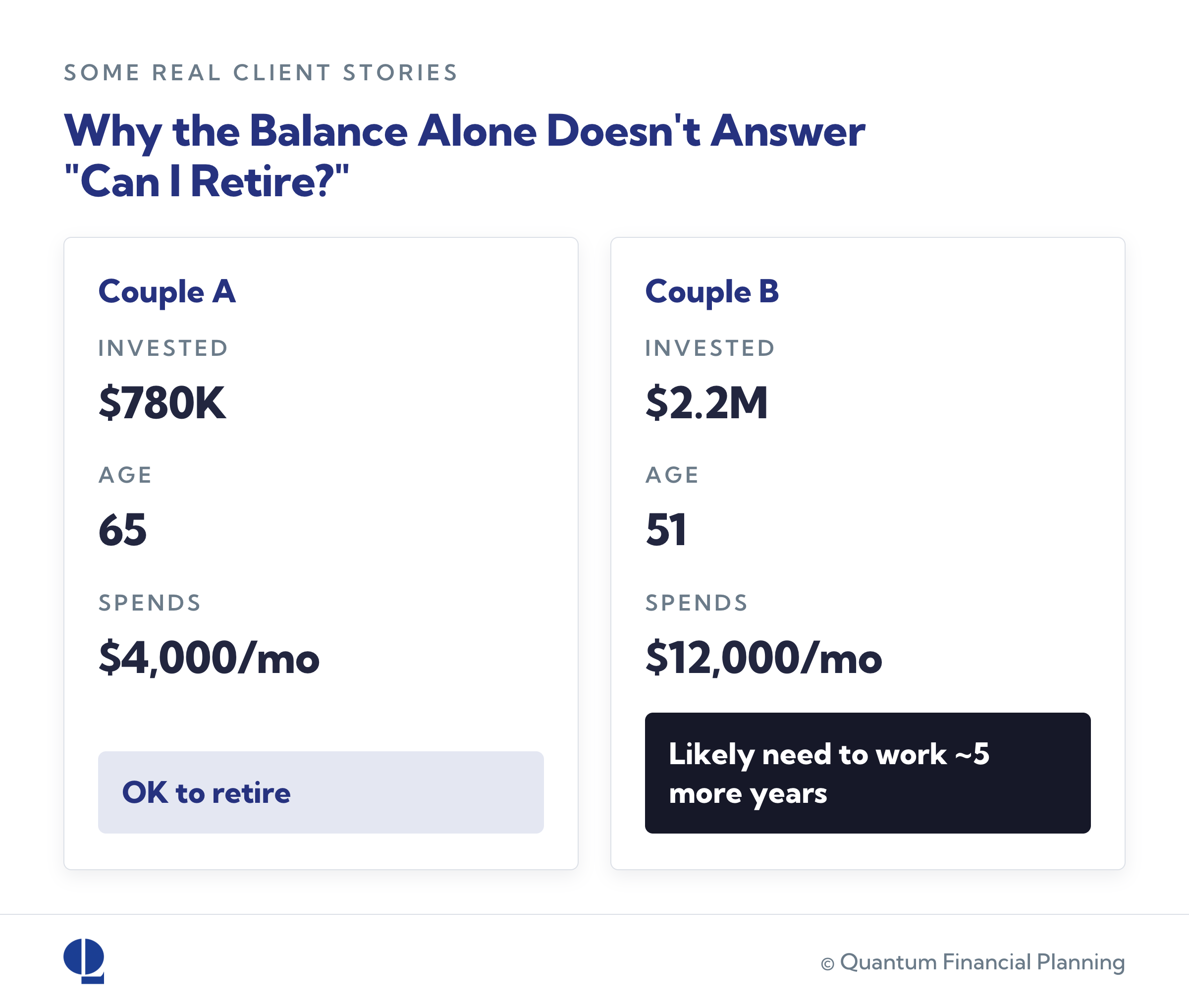
Not everyone has the same expenses; that’s why there’s no one-size-fits-all savings target. Take two households with $1 million saved. Both can be in very different positions when they retire.
With a paid-off home, relatively modest expenses, and more income from other sources, Household A may need to draw much less from savings each year. Compare that to Household B, with higher housing costs, a more expensive lifestyle, and fewer other sources of retirement income.
That same $1 million will stretch much further for Household A than for Household B.
Essential vs. discretionary expenses also factor into how much you’ll spend over the course of your retirement. Housing, food, transportation, healthcare, insurance, and other basic needs make up the essential expenses you’ll need to plan for. Nonessential expenses like travel, dining out, and hobbies offer more flexibility if you need or want to adjust your spending.
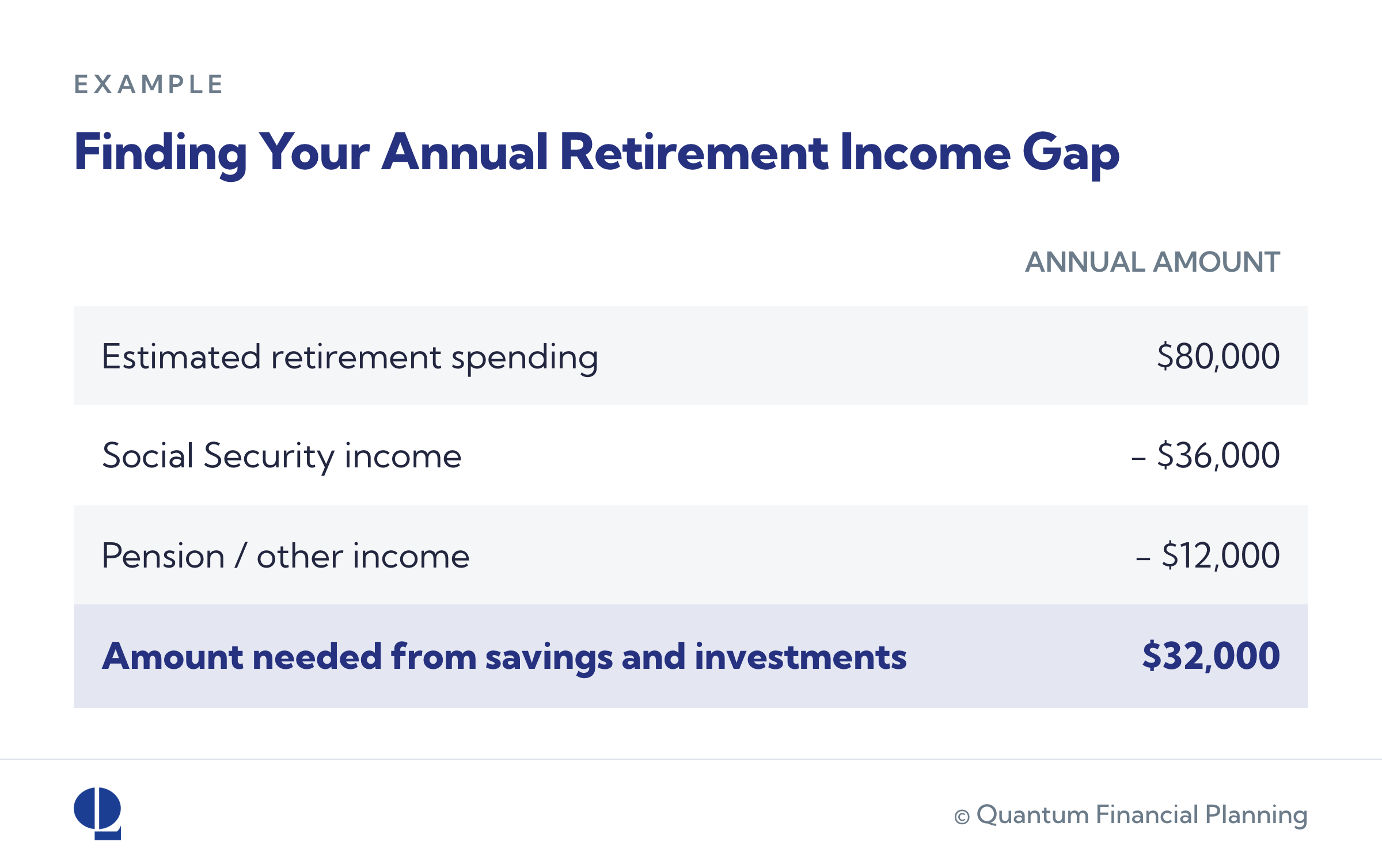
Keep in mind, your total annual spending isn’t necessarily the amount you’ll need to pull from savings each year. Social Security, pensions, or other income sources may cover some of your expenses. Your retirement plan will need to account for any remaining gaps.
Let’s take a closer look at the different types of expenses that make up your retirement spending.
Essential Spending
Essential expenses are the costs you’ll need to cover throughout retirement.
With few exceptions, these are your non-negotiables, like housing, utilities, food, transportation, insurance, healthcare, and other basic household needs.
By adding up these expenses, you can estimate how much income you’ll need each month or year to maintain your standard of living. You can then compare that amount with income you expect from Social Security, pensions, cash reserves, investments, or other sources to see how much of your essential spending is already covered.
Essential expenses can change throughout retirement. A mortgage may eventually get paid off, while healthcare or home maintenance costs could increase as you get older.
Reviewing these expenses periodically can help you keep your retirement plan aligned with your actual spending.
Lifestyle Spending
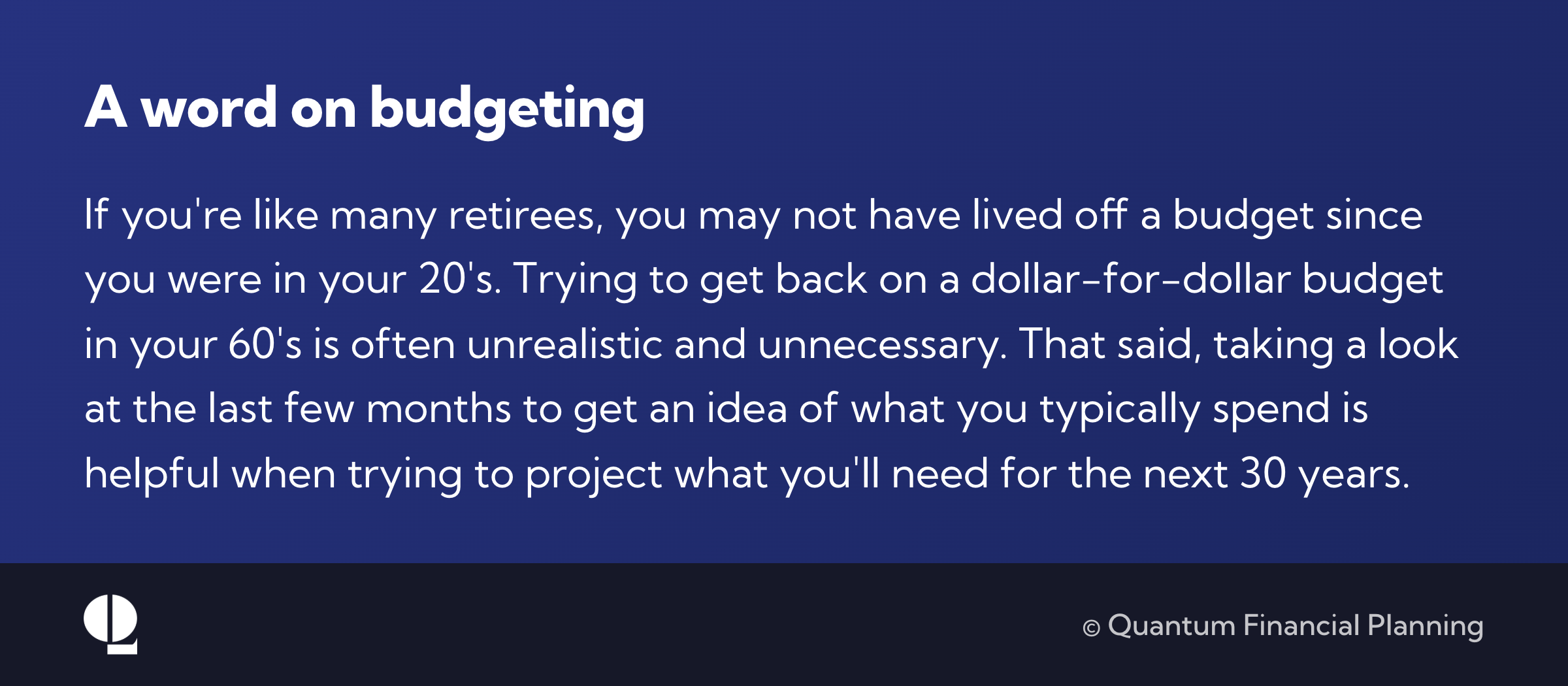
Retirement planning is about more than covering the basics. Depending on how you want to spend your time and money, travel, dining out, hobbies, charitable giving, gifts, family support, and even maintaining a second home can add meaningfully to your spending.
These expenses may go up and down, but they still belong in your retirement budget. After all, the goal is to account for the lifestyle you actually want to live.
Leaving out the things that make retirement enjoyable could mean you end up with a savings target that looks good on paper but doesn’t actually reflect what you want to do with your money.
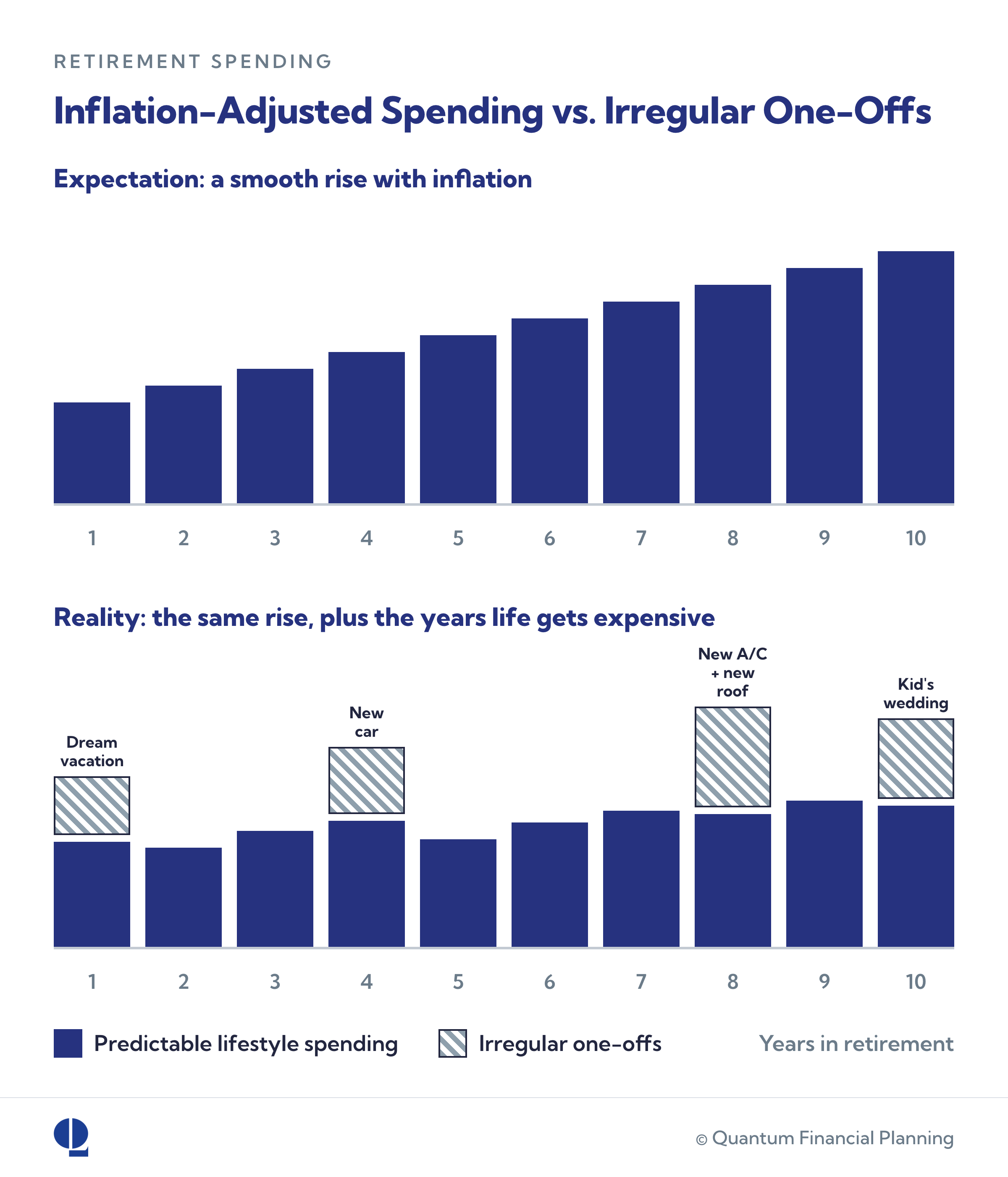
Irregular Expenses
Not all retirement costs fit neatly into a spreadsheet.
A major home repair, new vehicle, unexpected dental work, medical deductible, family emergency, or other large expense can add thousands of dollars to your spending in a given year.
Long-term care could also become a significant expense later in retirement. These costs are unpredictable; start by estimating what you may spend on them over several years. Then build that annual average into your retirement spending plan.
Of course, every year in retirement will look a little different. Planning ahead gives you some room for the years when several big expenses hit at once.
Washington Costs That Can Change the Retirement Number
Retirement costs vary depending on where you choose to live in Washington State. Housing, transportation, and other everyday costs can differ widely depending on the city or county you live in.
Living in a major city like Seattle, Bellevue, Redmond, Tacoma, Olympia, Spokane, Vancouver, or Bellingham, for example, may come with higher housing and other living expenses than retiring in a suburb or less densely populated community.
Even within the same area, your housing situation and lifestyle can meaningfully affect your spending. The amount you pay for property taxes, insurance, transportation, utilities, and other expenses also depends on where you live and your individual circumstances.
Statewide averages can provide a useful point of reference, but they don’t reflect what every retiree in Washington will actually spend. Your individual retirement plan should account for the specific costs you’re likely to face where you plan to live.
Housing Costs
Housing is often one of the largest expenses people face in retirement. If you still have a mortgage or rent payments, those monthly costs can account for a significant portion of your retirement income.
You’ll also need to factor in property taxes, homeowners or renters insurance, HOA dues, maintenance, and repairs. Even a paid-off home comes with ongoing costs.
Property taxes and insurance don’t disappear when the mortgage does, and maintaining an older or higher-value home can add up over time.
Where and how you choose to live in retirement can meaningfully affect how much income you’ll need. A change in housing costs can also affect how much income you’ll need to draw from your savings each year. Downsizing, relocating to a less expensive part of Washington, or moving closer to family could reduce some expenses, while other choices may increase them.
Daily Living Costs
Your day-to-day expenses also help determine how much retirement income you’ll need. Groceries, utilities, transportation, insurance, home services, and sales taxes may seem manageable individually. But together, they can become a significant portion of your annual spending.
If you rely on a car for errands, for example, your retirement budget may need to account for a car payment, insurance, gas, maintenance, and repairs. On the other hand, if you have access to public transit or can walk to many of the places you frequent, your transportation costs may be less.
Instead of relying solely on statewide cost of living averages, look at what you’re actually spending now based on your lifestyle, neighborhood, and household, and consider how those expenses may change in retirement.
Weather, Travel, and Lifestyle
Washington’s relatively mild climate gives retirees plenty of opportunities to enjoy the outdoors throughout much of the year. If hiking, golfing, boating, skiing, or visiting the state’s national parks are part of your retirement plans, consider the costs that come with those activities, from equipment and passes to transportation and lodging.
Travel can be another significant expense. Flights, hotels, rental cars, meals, excursions, and other costs add up quickly, particularly if you plan to travel often or spend a large part of the year away from home.
Your location within Washington can create additional travel and transportation costs.
If you regularly use the state’s ferry system, for example, fares may become part of your regular spending. If you travel frequently, flights, ground transportation, parking, and hotel costs can add up quickly. Family may factor into your plans, too. If your children or grandchildren live outside the area, regular visits could become another recurring expense.
None of these costs are essential, but they are lifestyle choices that can materially affect the amount of income you need to support them. And if they’re important to you, they deserve a place in your retirement spending plan.
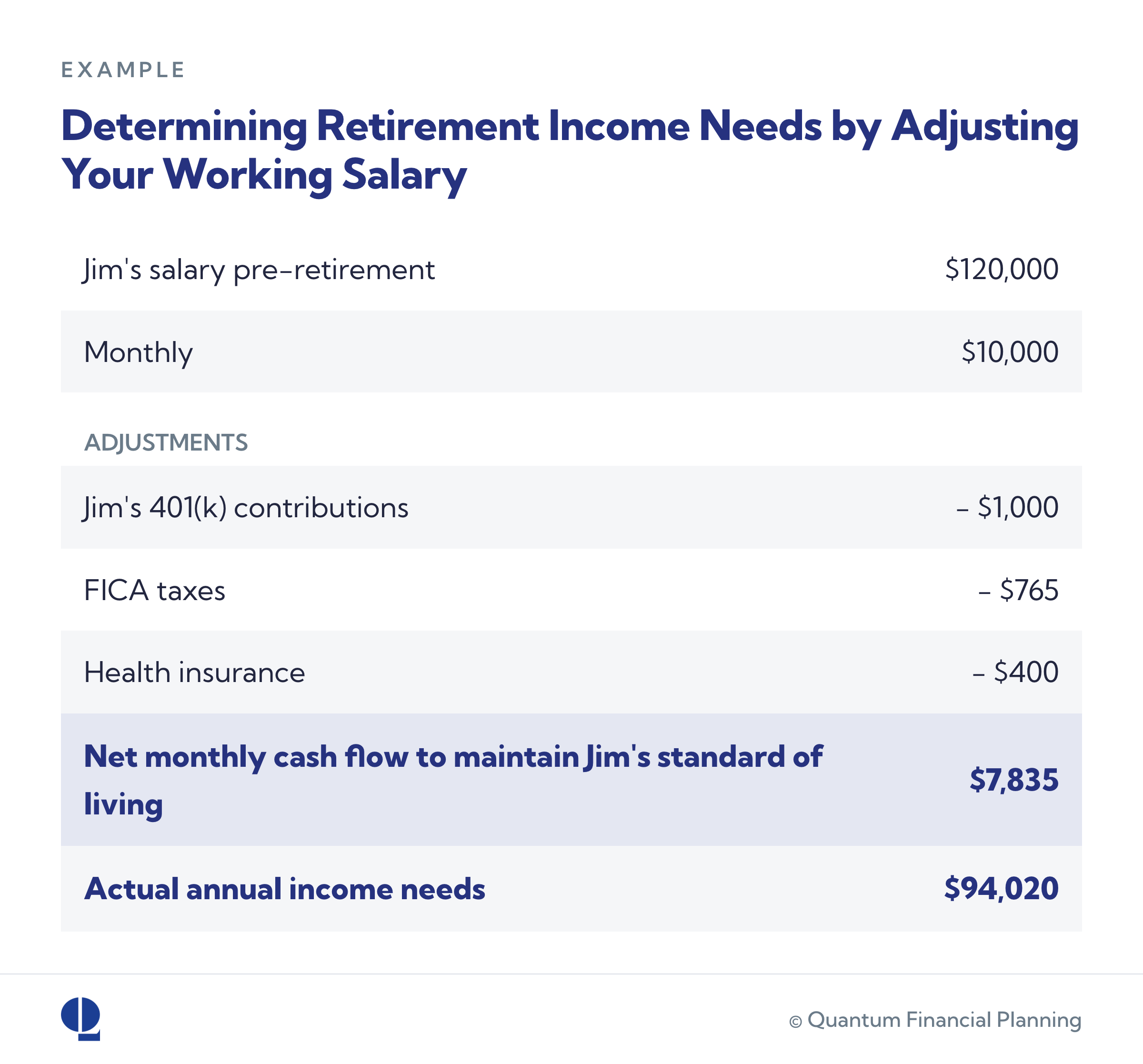
Many folks use the income they were bringing in just before retirement as a starting point. This is often a good start but typically needs some adjustments to be more accurate. Take Jim for example:
Income Sources That Reduce How Much You Need Saved
The amount you need to have saved for retirement depends in part on how much of your spending will already be covered by income you can count on.
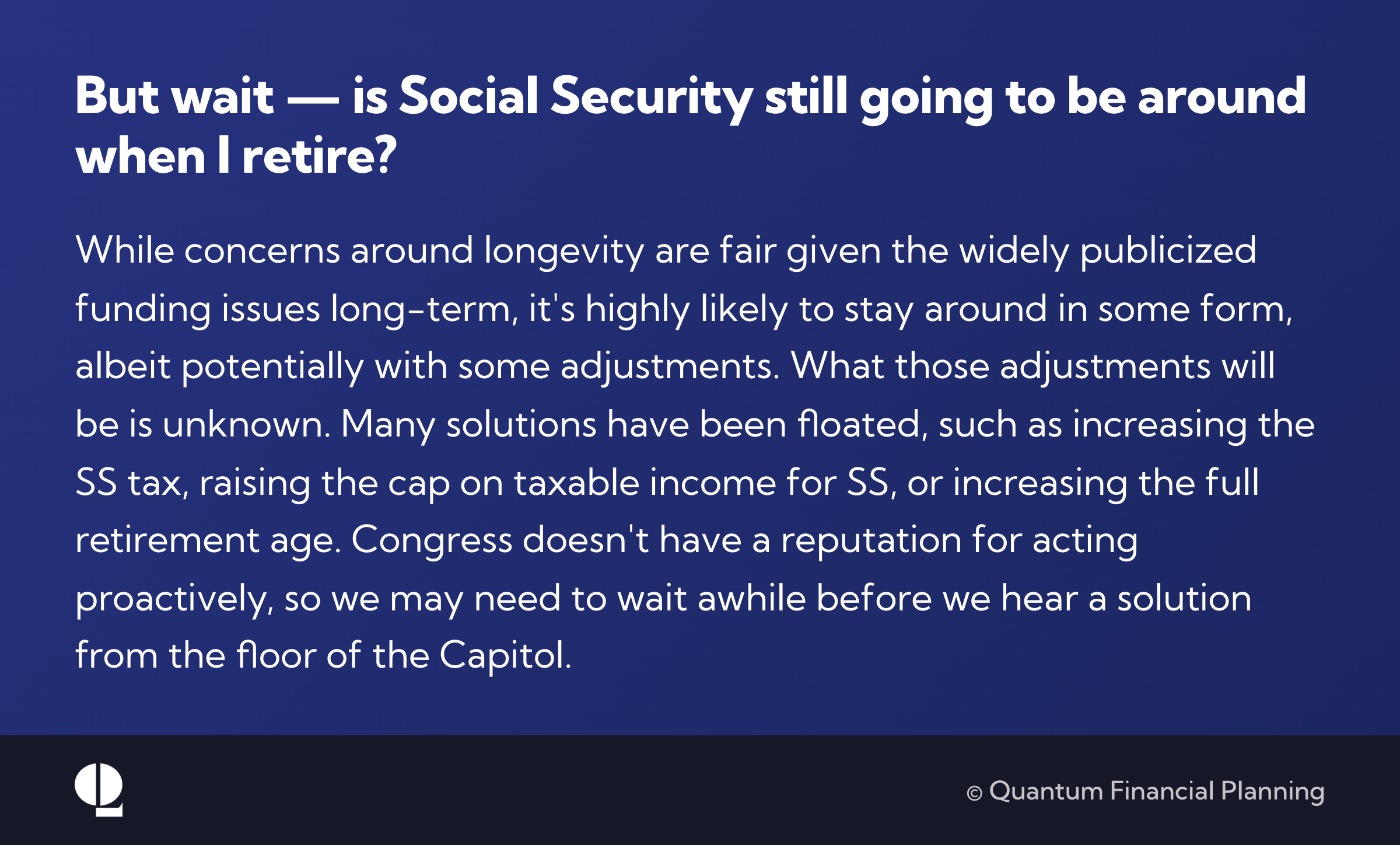
For many retirees, Social Security provides a base of reliable income each month.
Pensions and annuities can provide additional income that’s guaranteed by the issuing pension plan or insurance company, while rental income, business income, deferred compensation, or part-time work may provide other recurring sources of cash flow.
The more of your retirement spending these income sources cover, the less you’ll need to withdraw from your investment portfolio. When that income begins can also affect how much you need saved.
Delaying Social Security can increase your monthly benefit, while working longer or transitioning to part-time work may allow you to continue earning income while postponing or reducing withdrawals from your portfolio.
These decisions can change how much you’ll rely on your savings throughout retirement. That’s why knowing where your retirement income will come from and when you’ll need it is key to determining your savings goal.
Social Security
If you’re planning to rely on Social Security to fund part of your retirement, you’re not alone. Social Security serves as a foundation of reliable retirement income for many retirees.
When you claim matters because Social Security may provide a significant portion of your retirement income. Your claiming age also determines how much you’ll receive each month from Social Security.
You can start collecting Social Security retirement benefits as early as age 62, but claiming early means locking in a smaller monthly benefit for life. If you wait until your full retirement age, however, you’ll receive your full benefit.
You can also receive a larger monthly benefit by delaying Social Security beyond your full retirement age. Your benefit will continue to increase the longer you wait, up to age 70.
The more income you have from Social Security, the less you’ll need to rely on your savings and other sources to cover your retirement expenses.
If you’re married, divorced, or have lost a spouse, you may also qualify for additional Social Security benefits. Make sure you understand which benefits are available to you before deciding when to claim.
Pensions and Guaranteed Income
Pensions, annuities, and other sources of income backed by a plan sponsor or insurer can help cover your ongoing expenses and potentially reduce the amount you’ll need to withdraw from your retirement savings and investments.
If you have a pension or annuity, the payment option you choose may determine your income. Depending on the plan, you may be able to opt for a higher monthly payment that lasts for your lifetime or a lower payment that continues to your spouse after your death.
Some plans may offer additional payment options, so check with your pension or annuity provider to see what’s available. And even with so-called “guaranteed income,” it’s important to understand exactly how much income your pension or annuity will provide throughout retirement.
Consider whether payments increase with inflation via cost of living adjustments (COLAs) or stay the same over time, what happens to the income after you or your spouse dies, and how the payments will be taxed.
These factors can affect how much of that income is available to cover your retirement expenses over time.
Portfolio Withdrawals
Social Security, pensions, annuities, and other income sources may cover part of your retirement spending. You’ll likely need to fund any remaining expenses from your retirement savings and investments.
Where you keep those savings matters because different types of accounts are taxed differently when you take money out.
- Traditional 401(k)s and IRAs: You’ll typically pay income taxes on the money you withdraw.
- Roth accounts: You can generally withdraw money tax-free in retirement if you meet certain requirements.
- Taxable investment accounts: Selling an investment for more than you paid for it may mean you’ll owe taxes on the gains.
- Cash reserves: Keeping some money in cash gives you another way to cover expenses without having to sell investments or withdraw money from a retirement account.
If you have money saved in several types of accounts, you have more choices about where your retirement income comes from.
Your withdrawal strategy should account for taxes, the amount you need to cover your expenses, and money you may want to set aside for later in retirement.
Washington Tax Rules Retirees Should Factor In
Washington doesn’t have a personal income tax, which means the state doesn’t tax income retirees receive from Social Security, pensions, or retirement account withdrawals. However, beginning in 2028, a new state income tax will apply to Washington taxable income above $1 million.
Regardless of whether the new tax applies to you, you’ll still need to account for other taxes in retirement. Federal income taxes may still apply, and Washington residents may also pay property and sales taxes.
Depending on your financial situation, Washington’s capital gains excise tax or estate tax may also come into play. Taxes matter because they can affect how far you can stretch your retirement income and savings.
For example, if you need $80,000 a year to cover your expenses, travel, hobbies, and other priorities, you may need more than $80,000 in income and withdrawals once you factor in taxes.
Estimating what you’ll have left after taxes can help you determine how much money you’ll actually have available to spend throughout retirement.
Federal Income Taxes
Your federal tax bill in retirement depends not only on how much income you receive, but also on where that income comes from.
Different retirement accounts and income sources are taxed differently, which can affect how much you need to withdraw to support your lifestyle.
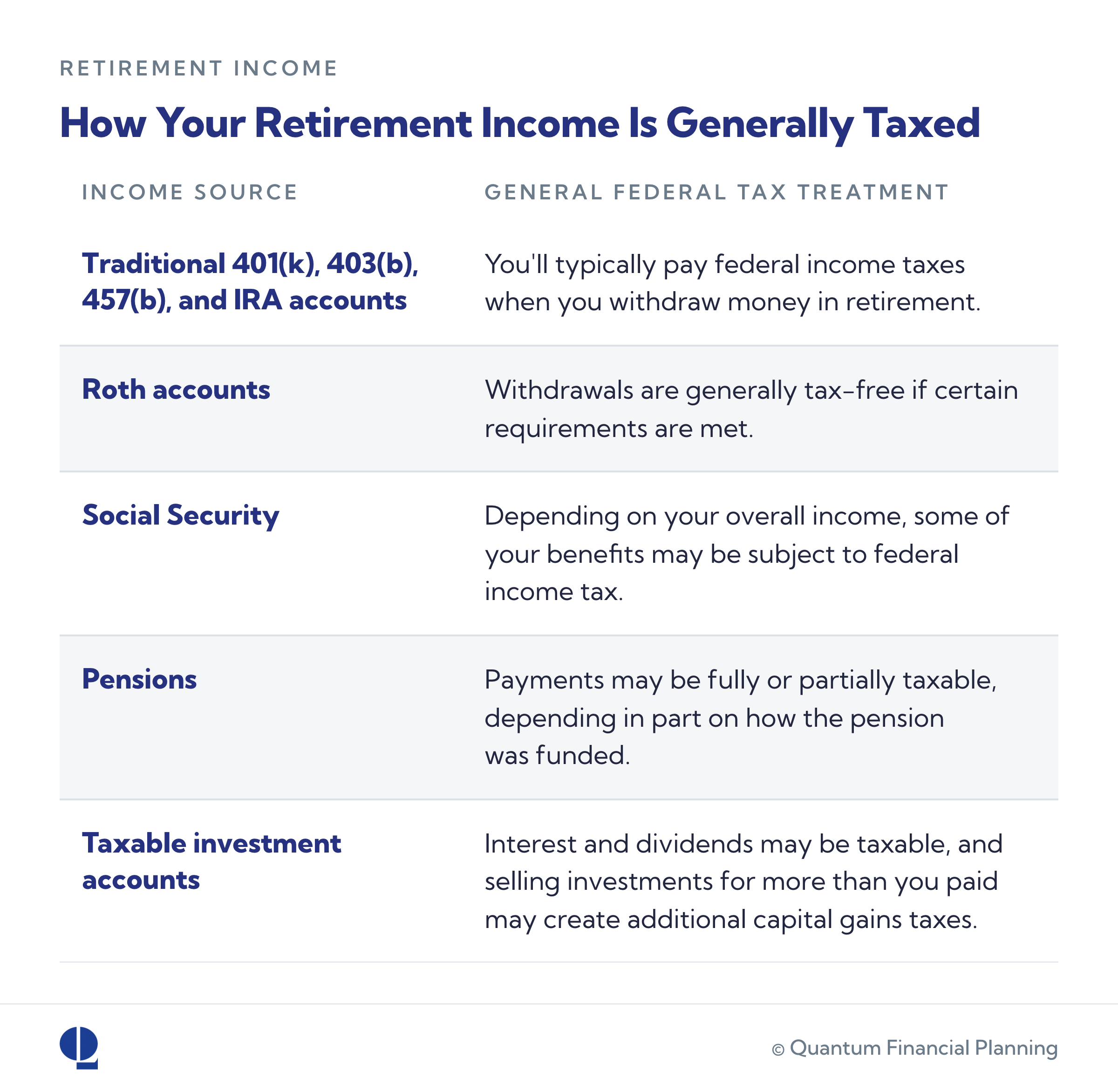
Going back to our earlier example, spending $80,000 a year doesn’t necessarily mean you need exactly $80,000 of income or withdrawals. You also need to consider how you’ll pay taxes.
In other words, you’ll need to estimate what you’ll receive after taxes before you can determine if your retirement savings are enough.
Washington Property and Sales Taxes
Washington currently doesn’t have a personal income tax, but you’ll likely still have to pay property and sales taxes. Unlike an income tax, these taxes are tied to where you live, your home’s value, and what you purchase.
If you own a home, property taxes will factor into your retirement budget even if your mortgage is paid off. The amount of property taxes you owe may change over time, depending on your location and home value.
Washington also offers property tax relief programs for qualifying seniors and people with disabilities, including programs that reduce property taxes or allow them to be deferred.
Washington also has both state and local sales taxes.
The rate you pay varies by location and what you buy, which means your spending habits and where you live are relevant when it comes to estimating this part of your tax bill. These costs are also affected by changes in housing decisions over time.
Downsizing or moving to another part of Washington, for example, could alter both your property taxes and everyday expenses, so home-related expenses aren’t the only factor to consider when weighing your housing options in retirement.
Capital Gains and Estate Tax Issues
Washington’s capital gains tax applies to certain long-term investment gains, but it doesn’t apply to every asset you might sell in retirement.
For example, sales of real estate are exempt, as are transactions within retirement accounts such as 401(k)s, IRAs, and Roth IRAs.
The tax may be more relevant if you have significant gains from investments held outside of your retirement accounts. If you’re planning to sell a large amount of stock or other taxable investments, it’s worth understanding whether Washington’s capital gains tax applies before you make the sale.
Washington also has an estate tax that may affect higher-net-worth households with substantial assets. The value of an estate can include real estate, investment accounts, business interests, retirement assets, life insurance, and other property.
Estates above Washington’s filing threshold may be required to file an estate tax return, although filing doesn’t necessarily mean you’ll owe estate tax. Neither tax will affect every Washington retiree.
But if you have a large portfolio, own a business or substantial real estate, or expect to make a major investment sale during retirement, consider talking through the potential tax implications with your tax and financial professional before making any decisions.
Healthcare and Long-Term Care Costs in Washington Retirement
Healthcare is among the more challenging retirement expenses to predict. Your costs will depend on your health, the type of insurance you have, when you retire, and how your medical needs change over time.
If you retire before age 65, when most people become eligible for Medicare, health insurance premiums alone could represent a significant expense for several years.
After you enroll in Medicare, you’ll still have costs to plan for, including premiums, deductibles, copays, prescription drugs, and any supplemental coverage you choose.
And insurance isn’t the only healthcare expense to consider. Dental and vision care, hearing aids, and other out-of-pocket costs can add to what you spend from year to year.
Later in retirement, you may also need in-home assistance, assisted living, memory care, or nursing care. Rather than trying to predict exactly what you’ll spend on healthcare decades from now, your retirement plan should account for both the routine costs you’re likely to face and the possibility of more significant care needs later in life.
Retiring Before Medicare
If you plan to retire before age 65, you’ll need to decide how you’ll pay for health insurance until you’re eligible for Medicare. Depending on when you retire, that could mean covering several years of premiums and other healthcare costs without insurance through work.
Your options may include purchasing coverage through the health insurance marketplace, continuing your former employer’s coverage temporarily through COBRA, enrolling in a spouse’s health plan, or using retiree health benefits if your employer offers them.
The Health Insurance Subsidy “Cliff”
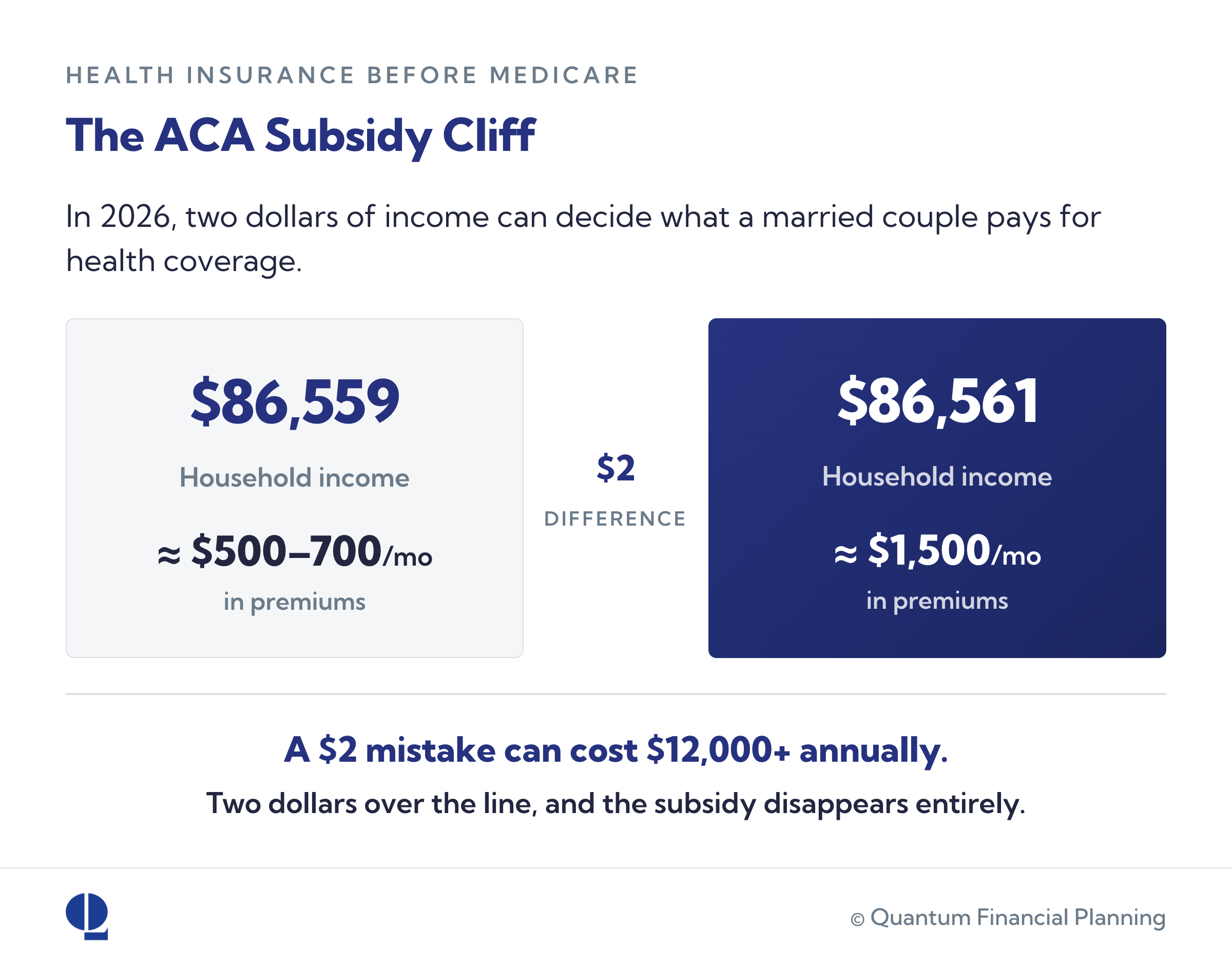
January 2026 brought changes to the provisions of the Affordable Care Act and retirees once again need to beware of some key thresholds. Namely, 400% of the federal poverty level. Retirees looking for health insurance in pre-medicare years can trigger thousands of dollars in extra insurance premiums by breaching that threshold by a single dollar. Current federal poverty levels are available online.
If you plan to continue working in some capacity, a job that offers health benefits may provide another option for coverage.
The cost of these options can vary considerably, but you’ll still need to account for health insurance when determining how much you’ll spend during the years before Medicare. In addition to monthly premiums, consider deductibles and other costs you’ll pay when you receive care.
Medicare and Supplemental Coverage
Medicare can make some healthcare expenses more predictable once you’re eligible, but it doesn’t cover everything.
Original Medicare, for example, doesn’t cover most dental care, routine vision exams, hearing aids, or long-term care. Depending on your needs, you may pay for some of these expenses yourself or choose additional coverage.
You also have choices in how you receive your Medicare coverage. You can use Original Medicare and add prescription drug or supplemental coverage, or choose a Medicare Advantage plan offered through a private insurance company.
Medicare Advantage plans provide your Medicare benefits and usually include prescription drug coverage, while some offer additional benefits such as dental, vision, and hearing coverage. Your Medicare decisions should reflect your broader retirement income plan.
The premiums, the amount you may have to pay when you receive care, and your expected prescription and healthcare needs all affect your retirement budget and the amount you’ll need to set aside to cover your healthcare expenses throughout retirement.
Long-Term Care
Another consideration when you get to retirement age is if and how you may want to cover the potential need for long-term care.
Long-term care covers a wide range of support you may need if you can no longer manage certain everyday activities like bathing and dressing on your own.
That could mean having someone help you at home, moving into assisted living or memory care, or eventually needing nursing home care. Where and how you would prefer to receive care matters when planning for these costs.
If staying in your home and remaining in Washington are important to you, for example, consider whether your home could accommodate changes in mobility, whether family members could provide some support, and what you might pay for professional in-home care.
The cost of long-term care varies widely, as do the severity of needs. While retirees on Medicaid may be eligible for subsidized long-term care, their options are limited compared to a person paying out of pocket. Top senior living communities can be upwards of $12,000 per month for those non-medicaid folks.
Long-term care insurance, retirement savings, and other assets may also play a role in covering the cost of care. Washington residents may also have another resource available through the WA Cares Fund.
Many Washington workers contribute to the state’s long-term care insurance program while they’re working and can access benefits if they meet the program’s contribution and care requirements.
Benefits became available statewide on July 1, 2026, and can pay for services such as in-home care, assisted living, nursing care, home modifications, and qualifying family caregivers. WA Cares provides a limited lifetime benefit, so it may cover only part of a person’s long-term care needs.
Understanding what you’ve earned through the program, along with your other resources and preferences for care, can give you a better idea of what additional costs you may need to prepare for.
How to Test Whether Your Washington Retirement Number Works
Your retirement plan may last 20, 30, or even more years, and things won’t always go according to plan. So ask yourself: How well does your retirement number hold up when they don’t?
Inflation can push everyday expenses higher. Markets will have good years and bad ones. Healthcare needs may change, tax laws can shift, and you may live longer than you originally expected. You could also find yourself providing financial support to children, aging parents, or other family members.
Testing your retirement number against different scenarios can give you a better idea of how your savings might hold up.
What happens if markets decline early in retirement? What if your expenses rise faster than expected or you need considerably more money for healthcare? What if you live five or 10 years longer than you’ve planned for?
A strong retirement plan should account for more than the best-case scenario.
Looking at what happens under normal conditions, weaker markets, and higher-cost scenarios gives you a chance to identify potential challenges and make adjustments before they become bigger ones.
Withdrawal Rate
Your withdrawal rate is simply the percentage of your retirement savings and investments you take out each year to cover your expenses.
For example, if you have $1 million saved and withdraw $40,000 in your first year of retirement, your initial withdrawal rate is 4%.
That doesn’t necessarily mean 4% is the right withdrawal rate for you or that you’ll withdraw the same percentage every year.
How much you can comfortably withdraw depends on factors such as:
How long your savings may need to last. Someone retiring at 55 may need to fund considerably more years than someone retiring at 70.
How your money is invested. Your mix of investments affects how much your portfolio may grow over time and how much its value may fluctuate, which matters when you’re regularly withdrawing money.
How flexible your spending is. Having room to reduce nonessential spending gives you more options if markets are down or expenses change.
How much income you have from other sources. Social Security, pensions, annuities, and other income can reduce the amount you need to withdraw from retirement savings and investments.
Taxes and inflation. Both affect the purchasing power of your withdrawals over time.
Your withdrawal rate needs to balance two competing priorities: providing enough income to support the retirement you want while preserving enough of your savings to support you for the rest of your life.
Inflation and Cost Increases
The amount you spend today probably won’t buy the same lifestyle 10 or 20 years from now. As prices rise, you’ll need more money to pay for many of the same goods and services.
Inflation affects nearly every part of a retirement budget, from groceries, utilities, and insurance to home maintenance, healthcare, travel, and other services.
And while prices don’t rise at the same rate every year or across every category, even modest increases can add up over a retirement that lasts several decades.
For example, if you spend $80,000 during your first year of retirement, you shouldn’t assume you’ll still spend $80,000 per year a decade later to maintain the same lifestyle. In fact, assuming an average inflation rate of 3%, you might need over $107,000!
Your retirement projections should account for expenses that increase over time so you can see whether your income and savings are likely to keep pace.
Market and Sequence Risk
Market downturns can be especially damaging when they happen early in retirement and you’re withdrawing money from your investments at the same time.
Here’s why: Imagine two people retire with the same amount of money and experience the same investment returns over the next 20 years, but in a different order.
Retiree A has several strong market years early in retirement and experiences a downturn later.
Retiree B experiences the downturn immediately after retiring, followed by stronger markets later.
Even though they experience the same returns, Retiree B may end up with less money than Retiree A over time. That’s because Retiree B is withdrawing from his investments while values are down.
That means selling more investments to generate the income he needs and leaving less money invested to grow when the market eventually recovers. This is known as sequence-of-returns risk.
Planning ahead can reduce the pressure to sell investments during a downturn. Having an appropriate level of cash reserves creates another source of money to cover large or unexpected expenses, while being flexible with your spending can help to maximize your retirement savings by avoiding excessive withdrawals when markets are weak.
A diversified investment mix and a plan for where your retirement income will come from can provide additional flexibility and help soften the impact of market and sequence risks.
Longevity
A retirement that lasts 30 years requires a different level of preparation (and money) than one that lasts 15 or 20. If you’re in good health or longevity runs in your family, planning for the possibility of living well into your 90s is especially important.
The longer you live, the more years your savings may need to cover everyday expenses, healthcare, taxes, and everything else you want to do in retirement. Married couples also need to consider what happens to household finances after one spouse dies.
Some income may decrease or disappear, while many expenses remain. Your retirement plan may need to support the surviving spouse well into their 80s or 90s.
Whether you’re planning for yourself or as a couple, longevity is another reason to test your retirement number against more than one scenario.
The goal isn’t simply to have enough money to retire. It’s to have a plan that can continue supporting you if retirement lasts longer than you expected.
Washington Retirement Planning FAQs
How much money do I need to retire in Washington State?
There isn’t a one-size-fits-all answer to what’s enough for retirement in Washington.
The amount you need depends on your expected spending, where you live, your housing and healthcare costs, the income you’ll receive from Social Security and other sources, and how long your savings may need to last.
Establish a baseline by starting with the retirement lifestyle you want, then determine how much you’ll need from your savings and investments to support it.
Is Washington State a good place to retire for taxes?
Washington doesn’t have a personal income tax, which means the state doesn’t tax income from Social Security, pensions, or retirement account withdrawals.
However, beginning in 2028, a new 9.9% income tax will apply to Washington taxable income above $1 million. And retirees still need to account for federal income taxes as well as Washington property and sales taxes.
The state’s capital gains and estate taxes may also apply to some households.
Does Washington tax Social Security or retirement income?
Currently, Washington doesn’t tax Social Security benefits, pension income, or withdrawals from retirement accounts such as 401(k)s and IRAs.
Federal taxes may still apply depending on the type and amount of income you receive.
How does housing affect how much I need to retire in Washington State?
Housing is often one of the largest expenses in retirement.
Your costs will look very different depending on whether you own your home outright, have a mortgage, rent, or pay HOA fees, property taxes, insurance, and maintenance costs.
Where you live in Washington also matters, since housing costs vary considerably across the state. A large home in western Washington cities like Seattle, Bellevue, or Issaquah, for example, might add millions to your “How much do I need?” number, while a modest home in Yakima or Spokane is much more affordable for most.
Should I pay off my mortgage before retiring in Washington state?
While a paid off mortgage is a goal for a lot of people transitioning to retirement, it’s often not necessary. In fact, sometimes going out of your way to pay off your mortgage aggressively can be detrimental to your financial plan if it hinders your ability to do other things with your money.
If you’re fortunate enough to have a low interest rate and your financial plan supports continuing to make regular mortgage payments, consult with your financial advisor before making extra payments on your mortgage.
What healthcare costs should I plan for before retiring in Washington?
If you retire before age 65, you’ll need health insurance until you become eligible for Medicare, which could mean paying for marketplace coverage, COBRA, or private insurance.
Once you’re enrolled in Medicare, you’ll still need to account for premiums and out-of-pocket costs, along with expenses Medicare may not cover, such as most dental care, routine vision care, hearing aids, and long-term care.
How should I estimate my retirement income gap?
Start with the amount you expect to spend each year in retirement, then compare it with the income you expect from sources such as Social Security, pensions, annuities, rental income, or part-time work.
The difference between the two is your retirement income gap, which you’ll need to cover through withdrawals from your retirement savings and investments.
What can make a Washington retirement plan run out of money?
Several factors can put additional pressure on your retirement savings, including withdrawing too much too quickly, market losses early in retirement, inflation, higher-than-expected healthcare or long-term care costs, unexpected expenses, and living longer than planned.
Testing your retirement plan against different scenarios can help you see how it might hold up when things don’t go according to plan.
Build a Retirement Plan Around Your Washington Lifestyle
There’s no single formula to determine how much you’ll need to retire in Washington.
Where you live, what you spend, how you want to spend your time, the income you can count on, your healthcare needs, taxes, and how you plan to use your savings all play a role.
The challenge is figuring out how all of these pieces work together, both when you retire and as your needs change over time.
Financial planning connects how much income you’ll need, how much you can reasonably withdraw from your savings, and where you have flexibility if your expenses, priorities, or circumstances change.
Because ultimately, reaching a certain savings balance isn’t the goal. The goal is knowing whether the money you’ve saved can support the Washington retirement you envision.
If you’re ready to put the numbers together, let’s talk.
We’ll help you build a retirement plan that fits your life, your priorities, and your plans for retirement in Washington.